
Understanding Appomattox County Releases
A release record marks the end of one defined period of custody. It does not always mean freedom from all confinement. Someone may leave the Appomattox County Sheriff's custody on bond, after a court order, after time served, or after a dismissal. The person may instead be transported to Amherst County Adult Detention Center, another Blue Ridge Regional Jail Authority site, the Virginia Department of Corrections, the U.S. Marshals Service, or immigration custody. Only the first group clearly describes a return to the community. A transfer ends one agency's control while another agency takes over.
The Appomattox custody map has an extra layer. The Sheriff has local law-enforcement and regulated lockup functions, but its public site provides no inmate locator. Amherst County Adult Detention Center, commonly called ACADC, is the principal documented regional facility serving Appomattox. BRRJA also runs facilities in Bedford, Campbell, Halifax, and Lynchburg. That structure makes the holding facility, arresting county, and public locator label different in some cases. A sound conclusion names both the event and its scope, such as “released from BRRJA to the community” or “transferred from BRRJA to VADOC and still confined.”
- Discharge
- The end of the identified custody or supervision term under the controlling record.
- Bond release
- Departure from pretrial custody under court-set conditions. The criminal case remains open unless separately resolved.
- Time served
- Credit or completion satisfies the active custodial portion reflected in the sentence computation.
- Detainer
- A request or legal basis for another authority to take custody when the first agency lets go.
Appomattox County Release Types
The description on the agency record determines the next search. A court notation alone may explain legal authority, but it does not prove the jail finished processing the person at that moment. Likewise, a blank roster result never supplies the reason a person disappeared. Use the event entry, destination, and court case number together.
| Event | Meaning | Next official check |
|---|---|---|
| Bond or court-ordered release | The person leaves pretrial custody under an order or conditions. | BRRJA or Sheriff release entry, then the Appomattox court docket. |
| Time served or sentence completion | The active local jail term is satisfied. | Final sentence order and the holding facility's release record. |
| Parole or probation | The person may be in the community while state or court supervision continues. | VADOC locator, District 24, Parole Board material, and the release order. |
| Transfer | One facility releases the person to another custodian. | Destination named in the transfer entry, then that custodian's locator. |
| Dismissal | One charge or case ended without conviction. | Check for other cases or holds before treating it as physical release. |
| Death in custody | The custody period ends, but this event must not be grouped casually with an ordinary community release. | Use the custodian's official record and any legally available investigative or court material. |
A person missing from ACADC may be at another BRRJA site. Absence is a lead, not proof of release.
Appomattox County Release Record Fields
The best record is an agency-created booking, release, discharge, or transfer document tied to a unique identifier. For a Sheriff event, request the existing Sheriff record. For an ACADC or other BRRJA stay, ask BRRJA. The public sources reviewed do not prove that every field below is kept or disclosable in every case, so phrase the request as a list of desired existing fields. The custodian can redact protected details or cite a lawful exemption.
| Field | What it can establish |
|---|---|
| Booked name and aliases | Connects the record to the name used at intake. |
| Booking, inmate, or DOC number | Separates people who have similar names. |
| Booking facility and agency | Identifies the likely custodian of the record. |
| Admission date and time | Defines when this custody period began. |
| Court and case reference | Links the jail event to the correct judicial matter. |
| Release date and time | Shows when that facility stopped holding the person. |
| Release type or disposition | Explains whether the event involved bond, time served, a court order, parole, or transfer. |
| Destination or receiving authority | Distinguishes community release from continued custody. |
| Supervising agency or district | Shows whether corrections authority continues after physical release. |
| Booking photograph | May help identify the intake record, but does not prove the release event. |
No official Appomattox or BRRJA source states how long a former detainee remains visible online. BRRJA's public tools are current-facility locators, not a promised archive. The lasting proof therefore comes from the custodian's record and the court file, subject to retention rules, sealing, expungement, and other access limits.
Request Appomattox County Release Records
Choose the record holder before sending a request. BRRJA's FOIA Officer handles booking and release data created by ACADC and other authority facilities. The Appomattox County Sheriff's FOIA Officer handles Sheriff-created arrest, lockup, transport, release, and photograph records. A narrow request saves time because these are separate custodians.
- Give the full name, aliases, date of birth if known, Appomattox case or arrest, and a focused date range.
- Ask for the existing booking and release sheet, exact release or transfer time, event type, releasing site, and destination.
- Request an electronic copy and a cost estimate. Do not ask the office to create a new report or answer broad questions.
- If the first office did not create the record, ask it to identify the likely custodian and redirect the focused request.
- Compare the response with the court order and the next custodian's status when a transfer appears.
Appomattox County Sheriff's Office FOIA
179 Morton Lane, Appomattox, VA 24522
P.O. Box 366, Appomattox, VA 24522
434-352-2666 | Fax 434-352-0445
Monday through Friday, 8 a.m. to 4:30 p.m., except state holidays
BRRJA FOIA Officer Patricia Stevens
510 Ninth Street, Lynchburg, VA 24504
434-847-3100 ext. 1224
foiarequest@brrja.state.va.us
The County FOIA page permits requests by mail, fax, email, telephone, or in person. It states a five-working-day response framework, with seven more working days after written notice when timely production is not practical. The County lists copying at $0.50 per page plus actual staff time in six-minute increments. An advance deposit may be required above a $200 estimate. BRRJA provides a separate authority records-request route.
The successful county capture shows the official request channels and cost rules. Open the Appomattox FOIA source before drafting a request.
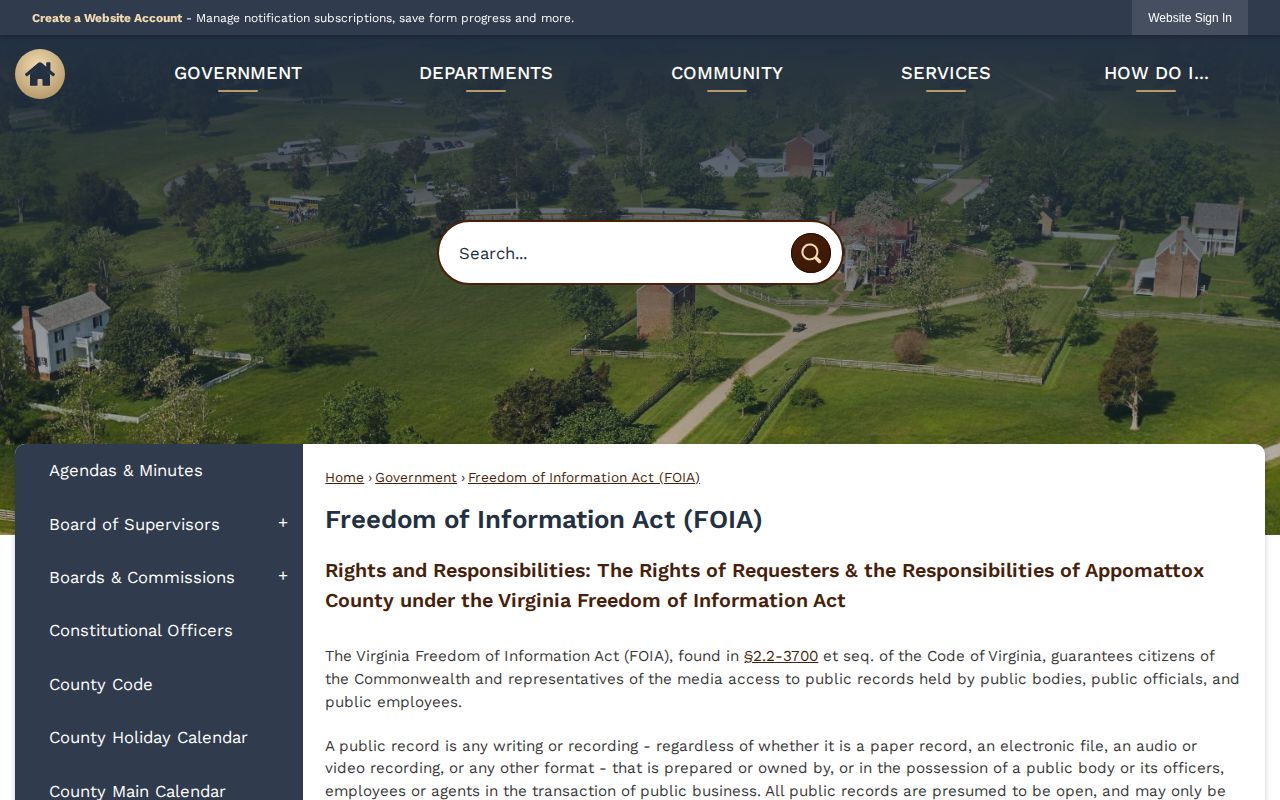
The page helps route a Sheriff record, while a BRRJA-created release still belongs with the authority's FOIA officer.
Virginia Release Record Access
Virginia's Freedom of Information Act begins at Code § 2.2-3700 and following. Public records are presumed open unless a specific exemption applies, but access depends on the current statute and the requester's eligibility. Section 2.2-3704 governs the basic response and cost process. Section 2.2-3706 contains special rules for law-enforcement and corrections records. It also addresses adult initial-intake routine booking photographs, with a possible delay when release would jeopardize a felony investigation.
Restrictions can apply to juvenile information, active investigative material, medical details, and sealed or expunged records. An agency may provide a redacted copy, withhold under a cited exemption, report that no responsive record was found, or use an allowed extension. No blanket local retention term was found for Appomattox or BRRJA release records. A narrow VADOC rule for one property form must not be treated as the retention period for an entire correctional file.
When Appomattox Release Records Disappear
Virginia's petition-based sealing rules can make a once-visible court result unavailable. Under § 19.2-392.12, an eligible matter can have a waiting period tied to the latest applicable disposition, release, or supervision-violation event. The statute generally uses seven years for an eligible misdemeanor and ten for an eligible felony, but exclusions and person-specific conditions matter. It is inaccurate to promise that every record is sealed after one standard period.
That rule explains why the absence of a docket or photo does not rewrite the custody history. Virginia FOIA also restricts ordinary disclosure of certain sealed and expunged criminal records. When a public result has vanished, use the unique case and booking identifiers with the originating office, while respecting any access limit it cites. A lawful restriction is different from a portal outage or spelling mismatch.
Find Appomattox County Released Inmates
Start with the system that most likely held the person. ACADC is the principal documented regional facility serving Appomattox, but BRRJA can move people among its five sites. A person serving only a local or regional jail stay will not necessarily appear in VADOC's state locator. A person committed to state prison belongs in VADOC. Federal and immigration custody require separate tools.
- Check the ACADC current locator. If present, the person is still shown in custody there.
- If absent, use the BRRJA facility menu to check Bedford, Campbell, Halifax, and Lynchburg. A match means transfer, not release.
- Request the relevant Sheriff or BRRJA release and transfer entry. This is the main fallback because no official Appomattox 24-hour or 72-hour release feed was found.
- Follow a state commitment through the VADOC Inmate and Supervisee Locator. A district-office result can mean community supervision continues.
- Read the Appomattox court disposition, then compare it with the actual custodian event. Use BOP or ICE only when the record points to those systems.
The 24-Hour Releases and 72-Hour Releases pages turn the same records route into exact time-window requests. Neither page invents a feed that BRRJA does not publish.
VADOC Appomattox Release Search
The VADOC Inmate and Supervisee Locator covers state institutions, probationers, parolees, institutional-hospital placements, some local or regional prisoners under VADOC authority, and Community Corrections Alternative Program participants. Search by a seven-digit DOC number when known. A name search needs the first three letters of the first name and the full last name; optional age, race, gender, and location filters help distinguish candidates.
| Search input | Best use | Limit |
|---|---|---|
| Seven-digit DOC ID | Most precise match within VADOC | Not a BRRJA booking number |
| First-name prefix and last name | Search when the DOC ID is unknown | Similar names require more identifiers |
| Location or district | Separates institutional custody from community supervision | Data is updated daily and may lag |
| Displayed date | Shows the date label used by the live record | A projected date is not an actual release event |
Record the exact status, location, and date label. Do not rename an anticipated date as an actual release date. VADOC does not promise a permanent public profile once a person is fully discharged from both custody and supervision. In that case, request the final Order of Release or discharge record and compare the sentencing court file. Virginia time computation determines a projection, while the final release document proves the event.
The official VADOC locator shows the search interface used for state custody and supervision.
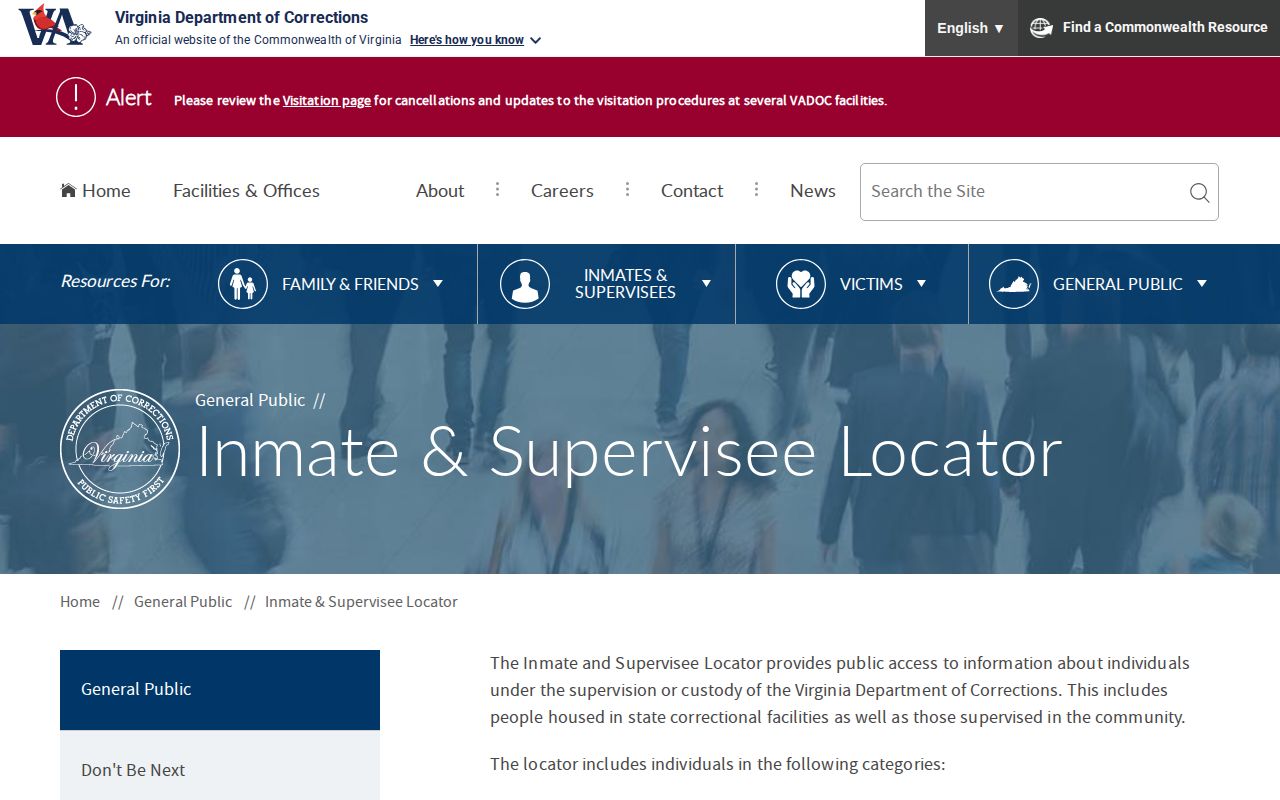
The combined locator title matters because a person may be out of prison but still listed under a supervising district.
Appomattox Release Notification Systems
Virginia Jail VINE through VINELink can track a named person in participating local or regional jail data and send notices for supplied custody events such as release or transfer. An alert is timely evidence, but it is not a certified release record. Preserve its event wording and time, check the BRRJA locator family, and confirm the event with the record custodian. A transfer notice may describe movement to another jail rather than release to the community.
VADOC uses a separate state-corrections notification path called NAAVI. Registration with local Jail VINE does not automatically follow a transfer into VADOC, and a later return to local or regional custody may require a new Jail VINE registration. The Virginia Sex Offender and Crimes Against Minors Registry is narrower still. It covers only people legally required to register and cannot serve as a general list of Appomattox County released inmates.
Which Appomattox Court Shows Release?
Appomattox General District Court handles misdemeanors and felony preliminary proceedings. Circuit Court handles felony trials and district-court appeals. A General District notation that a felony was certified or transferred is not a final disposition. Follow the case into Circuit Court, obtain the controlling order when needed, and reconcile it with the jail's timestamped release or transfer record.
The Virginia Find a Case page routes searches to adult case information. Online juvenile information remains restricted. “Disposed” is also not a release code. A disposed matter can include active incarceration, suspended time, probation, or time served. A bond or dismissal in one case may coexist with another hold.
The statewide court-information entry provides the official starting point.
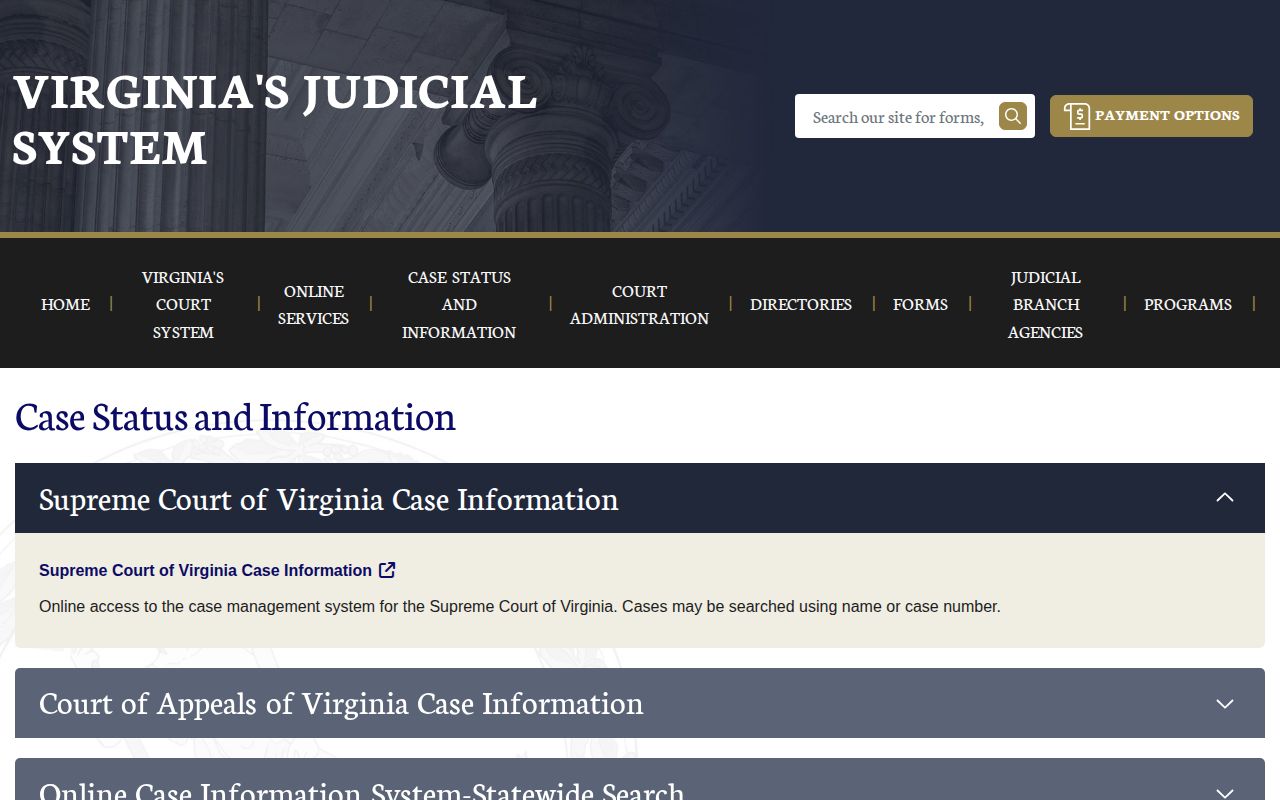
Use the court and case number shown there to match the right person and custody event.
Appomattox Release Supervision Office
VADOC Probation and Parole District 24 in Farmville serves Appomattox, Buckingham, Charlotte, Cumberland, and Prince Edward Counties. It is the concrete routing point when a VADOC result shows community supervision for an Appomattox resident. The office is at 601 Industrial Park Road, Farmville, Virginia 23901, and its main number is 434-392-8671. That assignment does not imply every person released from local custody is supervised.
A district result can support the conclusion that institutional custody ended while state authority continues. It does not supply the jail's exact gate time. Verify the displayed status, then compare VADOC release documentation, the sentencing order, and any applicable Parole Board decision. Parole and probation each require their own verification because neither term alone gives the custody-release time.
Correct an Appomattox Release Record
Correction begins with the custodian split. Send an error in an ACADC or other BRRJA booking or release entry to BRRJA's FOIA Officer. Send an error in a Sheriff-created arrest, lockup, transport, release, or photograph record to Major Travis Firebaugh, the County-listed Sheriff's FOIA Officer. Identify the exact field, the booking or case number, and the source document that supports the correction.
Do not ask one office to alter another agency's record. A court error goes to the proper clerk, while a VADOC status issue belongs with VADOC. No official local post-release property or identification correction process was found in the research, so no separate procedure should be assumed.
Old Jails Are Not Release Offices
Two historic Appomattox jail landmarks can divert a modern search. The National Park Service jail at Appomattox Court House represents the courthouse-village site; the replacement was completed around 1867 after the earlier building burned. The town building promoted as the Appomattox County Historical Museum stopped serving as a jail in May 1981.
Neither heritage location holds a current release record. Modern routing begins with the Sheriff's Office and BRRJA's ACADC. The official ACADC audit says the regional facility replaced the former Amherst and Appomattox jails.
Federal Appomattox Release Boundaries
The BOP Inmate Locator covers federal imprisonment from 1982 forward. It accepts federal identifiers or name and biographical filters. A past release date with no facility, or a location shown as “RELEASED,” establishes departure from BOP custody. It does not settle federal supervised release or custody by another agency.
ICE's Online Detainee Locator System serves current immigration detention. A no-result is not a historical release record. If a BRRJA entry names the U.S. Marshals Service or ICE as the receiving authority, leaving BRRJA does not mean community release. Follow the named system, then seek the relevant agency or court record. The BOP and ICE tools must never be used to characterize an ordinary Appomattox jail event without a federal transfer or case link.
The official BOP form illustrates the federal-only search fields.
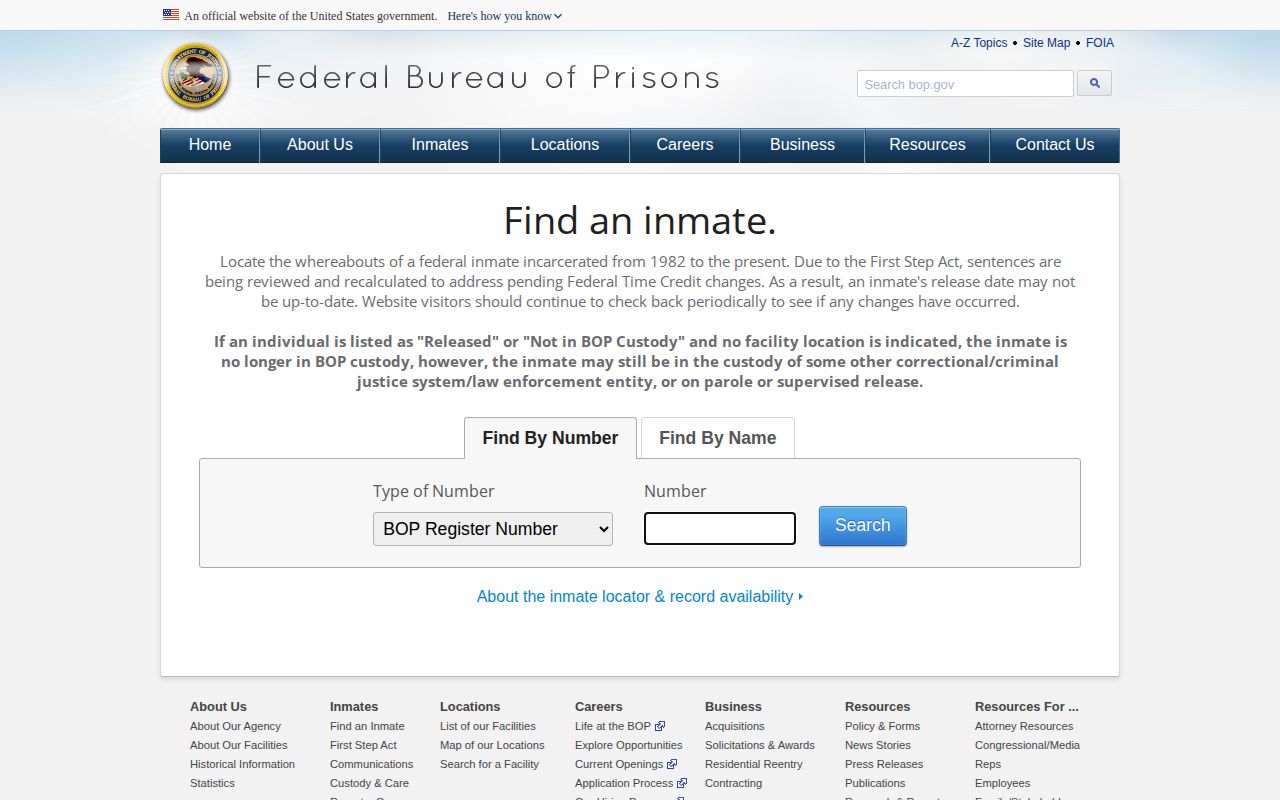
The result must be read as a BOP status, not as proof about Sheriff, BRRJA, VADOC, or ICE custody.
Appomattox Release Facility Map
Use the facility pages to identify the right live locator and records office. The Sheriff page covers local lockup and Sheriff-created records. ACADC is the principal documented regional site serving Appomattox. Bedford, Campbell, Halifax, and Lynchburg pages explain possible authority-wide placement rather than presenting those facilities as routine Appomattox jails. VADOC and BOP pages address separate state and federal systems.